
Blood Flow Restriction Training: A Practical Guide for Clinicians and Trainers
By: Tavin Sharp, 2nd year UofT MScPT student ∙ Estimated reading time: 5 minutes
By: Tavin Sharp, 2nd year UofT MScPT student ∙ Estimated reading time: 5 minutes
What Is Blood Flow Restriction Training?
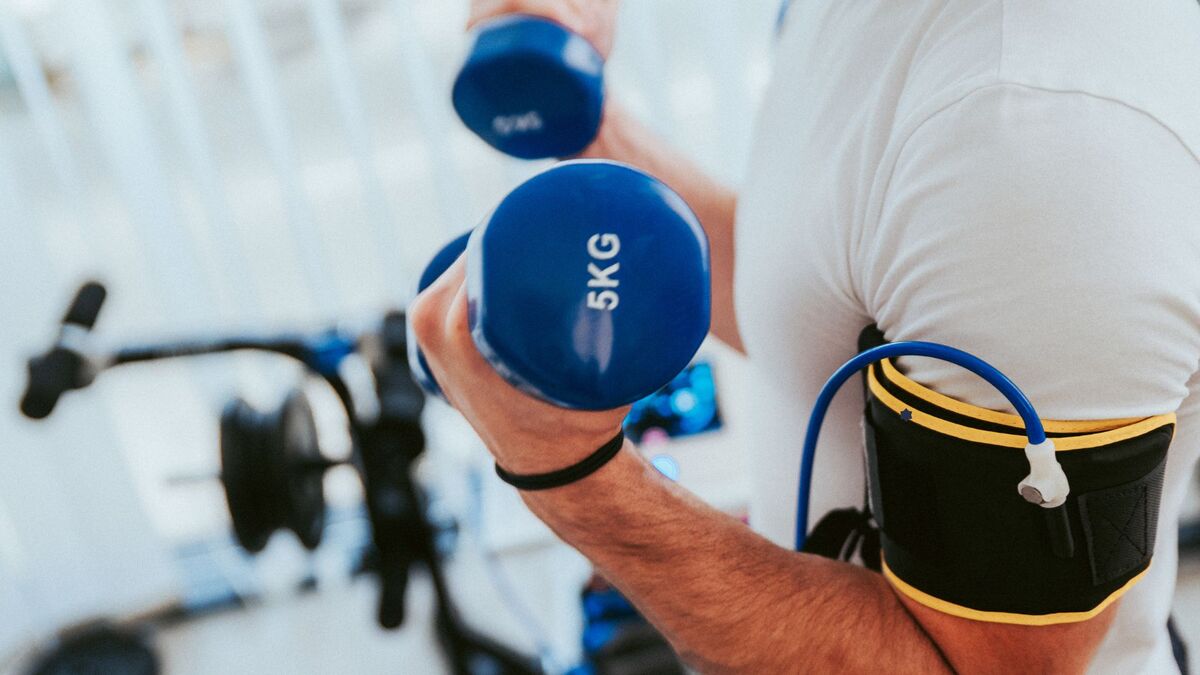
Blood flow restriction (BFR) training involves applying a cuff or band proximally on a limb to partially restrict venous return while preserving arterial blood flow. It is also known as flow restriction training, BFRT, or occlusion training.

It is critical to distinguish BFR from complete occlusion, which is unsafe for training. Clinical BFR uses controlled,
partial restriction to "trick" the muscle into responding as if it were lifting heavy loads due to local fatigue and
metabolic stress. For example, a post-operative ACL patient can perform leg extensions at 20–30% 1RM with BFR
to stimulate growth that would traditionally require heavy squats they cannot yet tolerate.

How Does Blood Flow Restriction Training Work?
BFR works through reduced venous outflow and maintained arterial inflow, resulting in muscle hypoxia and cellular swelling. This creates three primary physiological triggers:
- Metabolic Stress: The accumulation of lactate and hydrogen ions drives hypertrophy.
- Fiber Recruitment: The hypoxic environment forces the early recruitment of fast-twitch (Type II) muscle fibers even under low-load conditions.
- Hormonal Response: BFR triggers acute responses in growth hormone (hGH), IGF-1, and mTOR signaling.
Together, these mechanisms allow low-load exercise to mimic the adaptations of heavy resistance training for strength and size.
Evidence-Based Benefits of BFR Training
Research from 2000–2025 supports BFR as a safe, effective adjunct in rehabilitation and performance settings. Key benefits include:
- Increased muscle hypertrophy and strength with low loads.
- Improved muscular endurance and reduced joint stress compared to heavy lifting.
- Advantages for early post-operative patients (e.g., ACL reconstruction, rotator cuff repair, total knee arthroplasty).
- Sarcopenia prevention and functional strength gains in older adults where heavy resistance may be poorly tolerated.
- Performance gains in athletes, such as improved sprint performance and jump height, when integrated into regular training.
Who Can Benefit From Blood Flow Restriction Therapy?
BFR is a versatile tool adapted across the rehab-to-performance continuum. Specific beneficiary groups include:
- Post-Surgical: Lower limb (ACL, meniscus) and upper limb (rotator cuff, shoulder stabilization).
- Chronic Pain: Patients with osteoarthritis, rheumatoid arthritis, or chronic low back pain who require low-load approaches.
- Athletes: Those in deload weeks, during in-season maintenance, or training around injuries.
- Geriatrics: Deconditioned individuals who need to improve balance and functional capacity but cannot tolerate high loads.
Safety, Screening, and Contraindications
Thousands of subjects have used BFR with a low incidence of serious adverse events when protocols are followed. Clinicians should use the MST Clinical Algorithm to screen patients.
Key Screening Considerations:
- Absolute Contraindications: History of DVT, uncontrolled hypertension, clotting disorders, pregnancy, and severe peripheral vascular disease.
- Precautions: BFR increases blood pressure and heart rate; clinical judgment and medical clearance are necessary for high-risk populations.
- Practical Safety: Monitor for sharp pain, numbness, skin color changes, or dizziness. Ensure cuffs are not applied over joints or superficial nerves.
Best Practices for BFR Cuff Pressure and Prescription
Individualized cuff pressure based on Limb Occlusion Pressure (LOP) is the current gold standard.
| Parameter | Recommendation |
| Upper Extremity Pressure | Approximately 40–50% LOP |
| Lower Extremity Pressure | Approximately 60–80% LOP |
| Load | 20–40% 1RM load |
| Sets/Reps | 4 sets (typically 30-15-15-15 reps) |
| Rest Intervals | 30–60 seconds between sets (cuff remains inflated) |
| Frequency | 2–3 sessions per week per muscle group |
Implementing BFR in Your Clinic
Clinicians can follow a stepwise integration model: screening, baseline assessment, exercise selection, determining cuff pressure, and documentation.
- Early Stage Rehab: Exercises like straight-leg raises, short arc quads, and heel slides.
- Later Stage/Athletic: Dynamic movements like leg presses, split squats, step-ups, and push-ups.
- Education: Inform patients that they will feel a snug pressure and muscular "burn," but should not experience sharp pain or tingling.
Scope of Practice and Education
BFR falls within the scope of practice for physical therapists, occupational therapists, athletic trainers, chiropractors, and strength professionals competent in anatomy and exercise prescription.
Continuing education is essential for the safe use of medical tourniquets and managing risk. Embodia’s online education, such as "An Introduction to Modern Strength Training - Blood Flow Restriction" with Dr. Kyle Coffey, is designed to build this clinical competence.
Embodia’s BFR Resources
Embodia’s collaboration with Dr. Kyle Coffey emphasizes a research-informed, practical approach. Clinicians using the platform can access a BFR Exercise Library featuring high-quality video demonstrations of resistance and aerobic exercises optimized for BFR. The library allows users to search by body region or rehab stage to digitally prescribe and track patient compliance.
Learn about Blood Flow Restriction in this Course!
Key Takeaways
- Mechanism: Blood flow restriction (BFR) training uses a pneumatic cuff or band to partially restrict venous blood flow while allowing arterial inflow during low-load exercise.
- Low Load, High Yield: BFR can produce muscle strength and hypertrophy gains comparable to heavy lifting using loads as low as 20–30% 1RM, making it ideal for early rehab and pain-limited patients.
- Safe Practice: Safety requires individualized BFR cuff pressure based on Limb Occlusion Pressure (LOP), basic screening for contraindications, and evidence-based exercise prescription.
- Resources: Embodia offers an online course with Dr. Kyle Coffey ("An Introduction to Modern Strength Training - Blood Flow Restriction") and a BFR exercise library to help clinicians prescribe and track sessions.
Frequently Asked Questions
How long should a typical BFR session last?
Most single-muscle-group sessions last 15–25 minutes. Continuous cuff inflation during an exercise block should typically stay under 5–10 minutes, with deflation between different exercises or body regions.
Can BFR be combined with aerobic exercise?
Yes. Low-intensity aerobic BFR (e.g., walking or cycling at 30–40% VO2 max) has been shown to improve aerobic capacity and leg strength, especially in deconditioned or post-operative patients.
What equipment do I need to start BFR?
You need adjustable BFR cuffs in various sizes and a system to estimate or measure LOP (such as a Doppler US or medical-grade pneumatic unit). Automated systems are recommended, but manual cuffs can be used with proper monitoring.
How often should BFR be performed?
Most evidence-based protocols recommend performing blood flow restriction training 2–3 times per week for each muscle group, ensuring at least one rest day between sessions targeting the same area to allow for adequate recovery. This frequency helps optimize muscle growth and strength gains while minimizing delayed onset muscle soreness and reducing the risk of nerve injury. Incorporating blood flow restricted exercise into your routine with proper pressure applied on the upper arm or leg can safely enhance muscle mass and improve heart health, especially for certain populations unable to perform high intensity exercise or lifting heavy weights. Utilizing lighter loads during blood flow restriction training increases metabolic stress and promotes muscle size and endurance without the need for heavy weights, making it a valuable tool in physical therapy and strength training programs.